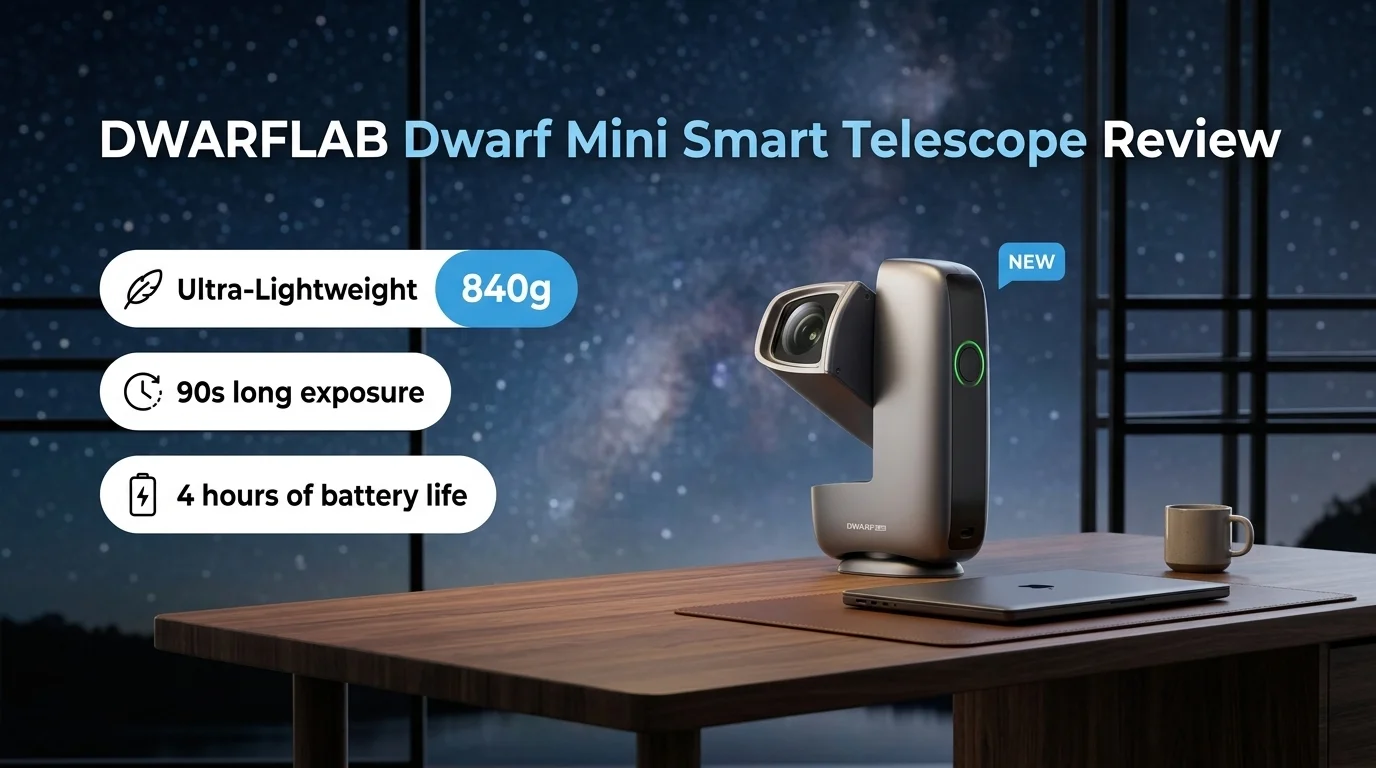
DWARFLAB Dwarf Mini Smart Telescope Review
The Real Talk Intro & Quick Verdict
Finding a telescope is easy. Finding one that’s actually enjoyable to use is much harder.
Many first-time buyers quickly discover that traditional telescopes can be bulky, time-consuming to set up, and frustrating when you’re trying to locate a single object in the night sky. Even experienced hobbyists sometimes leave their larger setups at home simply because carrying everything isn’t practical.
That’s what made the DWARFLAB Dwarf Mini Smart Telescope stand out during my research. Instead of focusing on larger optics or complicated manual controls, it aims to make astronomy and astrophotography more approachable through automation, portability, and smartphone control. This review isn’t based on personal hands-on testing. Instead, it’s based on researching the product information and a large number of customer experiences shared by buyers who have used the telescope in different conditions. The goal is to separate the marketing promises from what owners consistently report after spending time with it.
Quick Summary
Verdict: A well-designed portable smart telescope that makes astrophotography much easier for beginners while still offering features experienced users can appreciate.
Best For: Beginners, travelers, campers, casual astronomers, and anyone interested in portable smart telescopes.
Not Ideal For: Buyers whose main goal is detailed planetary viewing or extremely high-resolution astrophotography.
Key Highlights: • Auto GOTO tracking • Smartphone app control • 90-second exposures • Compact 1.85 lb design • Built-in light pollution filters
Affiliate Disclosure (Note: Prices are not mentioned here as they may change — refer to the affiliate links for updated deals. No additional cost to you.)
The biggest advantage of the DWARFLAB Dwarf Mini isn’t that it replaces a professional astrophotography setup—it doesn’t. Its biggest strength is lowering the barrier to entry. Instead of spending your evening aligning mounts and manually searching the sky, you can spend more time actually capturing galaxies, nebulae, star clusters, and the Moon. That convenience is exactly why so many users describe it as a telescope they actually use regularly rather than one that stays in a closet.
Features vs Reality
Marketing pages often make products sound effortless, but the real value comes from understanding where the claims match actual user experiences.
Marketing Claim | Reality After Research |
|---|---|
Pocket-sized portability | Users consistently praise its lightweight design and mention taking it hiking, camping, and on trips because it fits easily into a backpack. |
Auto GOTO tracking | Many reviewers say automatic object finding is one of its biggest strengths, removing much of the frustration of locating deep-sky objects manually. |
Beginner-friendly operation | Most buyers report getting started quickly with the app, although several mention watching tutorial videos helps unlock more advanced features. |
90-second long exposures | Supported in EQ Mode, but longer exposures work best when paired with a suitable tripod and proper alignment. |
Built-in image processing | Users appreciate the integrated processing tools, though experienced astro photographers often choose additional third-party software for further editing. |
Technical Specifications
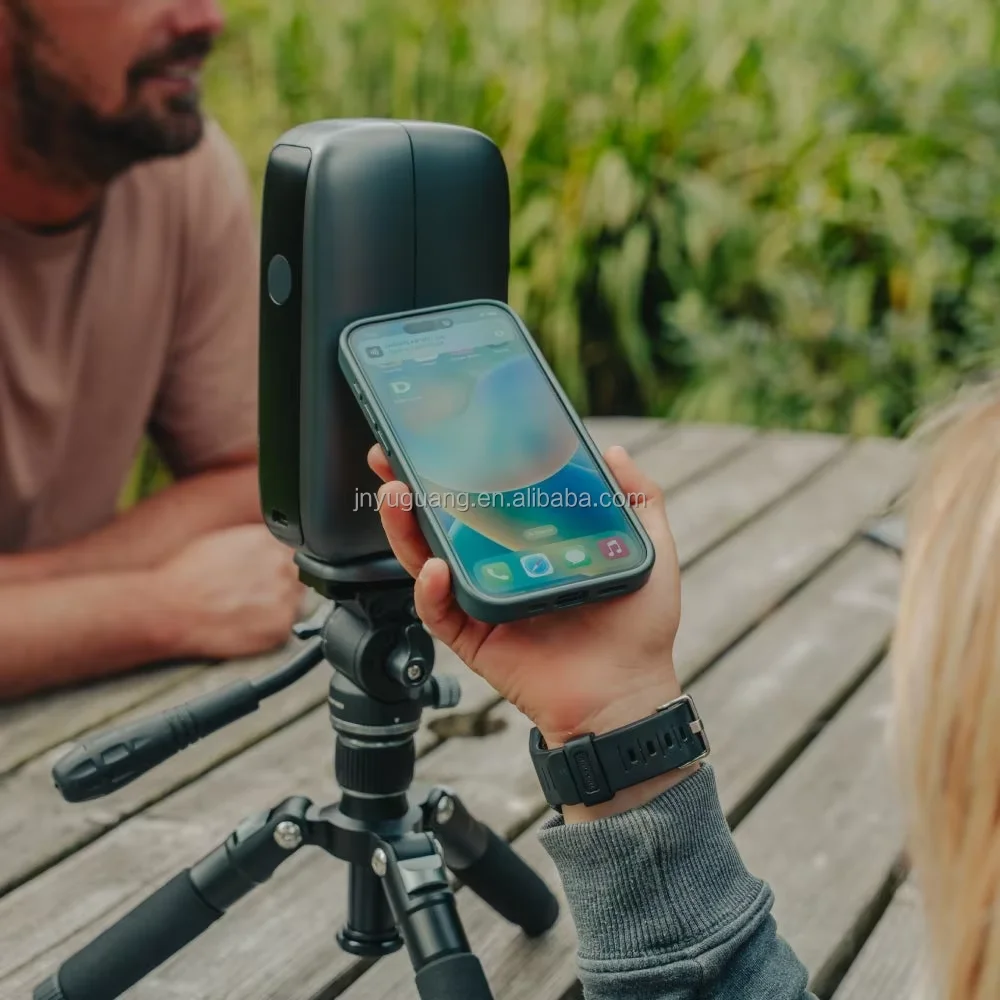
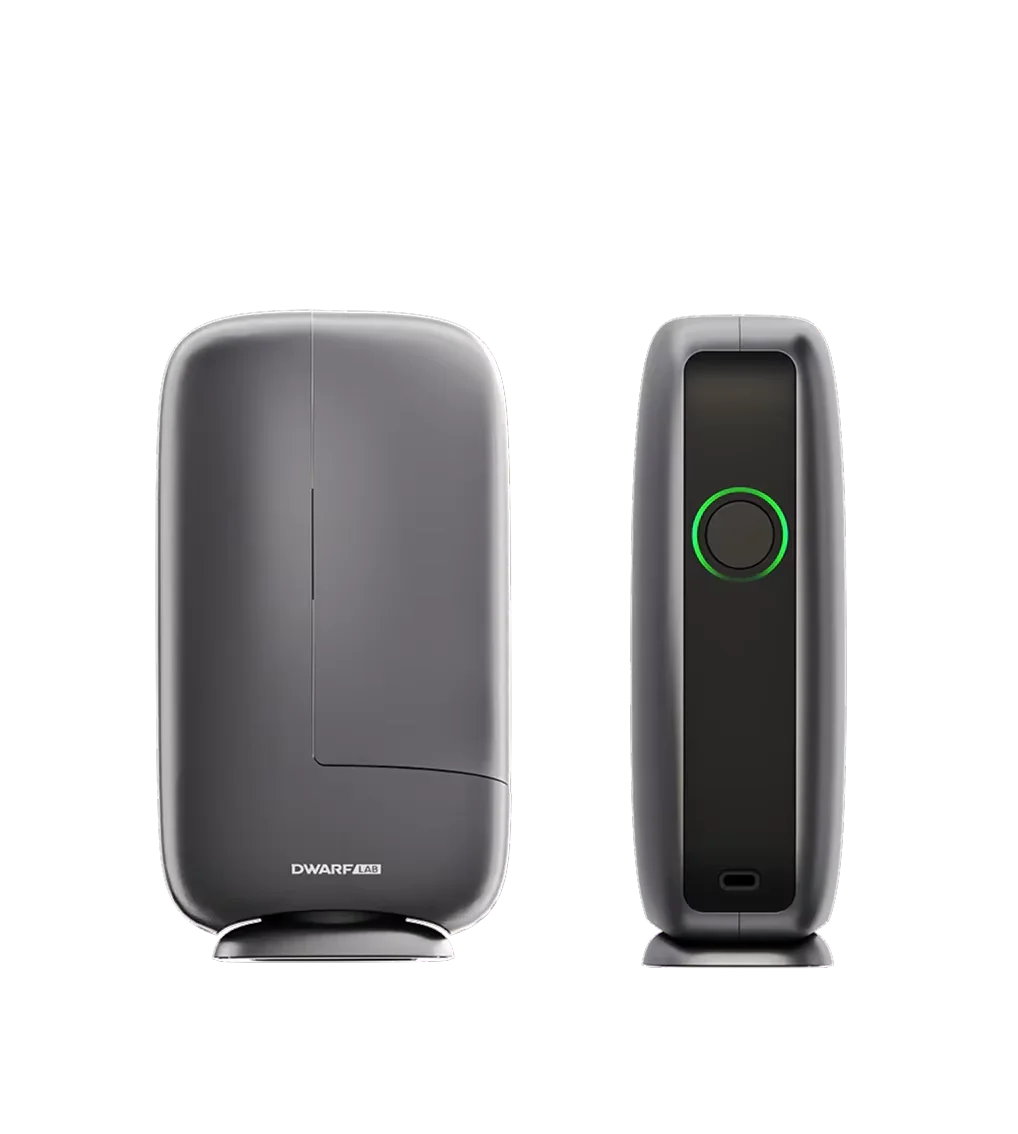
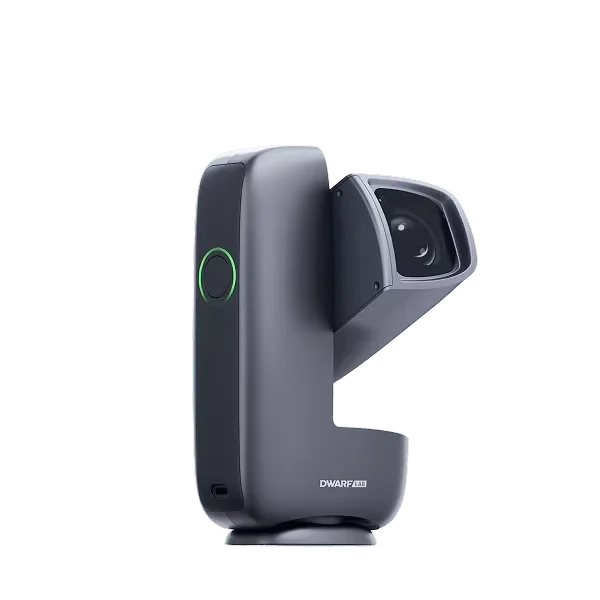
- Weight: 1.85 lbs (840g) — Easy to carry for travel and camping without adding much bulk.
- 30mm Telephoto Lens — Suitable for photographing many deep-sky objects while keeping the telescope compact.
- Sony IMX662 Sensor — Designed to capture low-noise images during long exposures.
- Auto GOTO & App Control — Lets users locate and track celestial objects directly from a smartphone instead of manually searching the sky.
- EQ & AZ Modes — Offers a simpler mode for casual observing and an equatorial mode for longer-exposure astrophotography.
- 7000mAh Battery — Rated for roughly four hours of use, making it practical for an evening observing session.
- 64GB Built-in Storage — Allows photos and videos to be stored directly on the telescope before transferring them to your device.
Common Issues & Troubleshooting
The majority of complaints aren’t about image quality—they’re about expectations. Some buyers expected detailed views of planets like Jupiter and Saturn, but this telescope is much better suited for deep-sky photography than planetary imaging. Others recommend updating the firmware, using a sturdy tripod for EQ Mode, and allowing enough time for image stacking to achieve the best results. A few reviewers also mention occasional connection issues during setup, while others note that cloud processing requires an internet connection.
The Good, The Bad, & The Ugly
✅ Pros
- Exceptionally portable — At only 1.85 pounds, it’s easy to carry for travel, camping, or backyard observing.
- Beginner-friendly operation — Auto GOTO, app control, and the Sky Atlas remove much of the frustration of finding celestial objects.
- Strong deep-sky capabilities — Performs well for photographing galaxies, nebulae, star clusters, and the Milky Way when used as intended.
- Flexible shooting modes — AZ Mode suits casual use, while EQ Mode enables longer exposures for more advanced astrophotography.
- Helpful built-in processing tools — Integrated image processing makes it easier for beginners to produce satisfying results before moving to third-party software.
❌ Cons
- Not designed for detailed planetary imaging — Planets appear much less detailed than they would through dedicated planetary setups.
- 1080p sensor limits image resolution — Several experienced users mention that the resolution is adequate for sharing online but limited for large prints or heavy cropping.
- EQ Mode benefits from extra accessories — A stable tripod and, for extended sessions, a power bank are highly recommended.
- Learning curve beyond Auto Mode — While basic operation is simple, getting the best results still requires patience and practice.
- No carrying case included — Some buyers feel a protective case should have been part of the package.
⚠️ Researcher’s Note
If your goal is photographing galaxies, nebulae, or the Milky Way, the DWARFLAB Dwarf Mini is likely to meet your expectations. If you’re mainly interested in close-up views of planets, you’ll probably be happier with a telescope designed specifically for planetary observation. Setting realistic expectations before buying can make a huge difference in how satisfied you are with the product.
Community FAQ & Sentiment
After reviewing a large number of customer experiences, one theme appears again and again: buyers appreciate how much easier the DWARFLAB Dwarf Mini Smart Telescope makes astrophotography. Many reviewers describe it as a product that removes much of the frustration traditionally associated with astronomy. Instead of spending significant time locating celestial objects, they simply use the companion app, choose a target, and let the telescope handle the tracking. Beginners frequently mention being surprised by what they could capture on their very first clear night, while more experienced users appreciate having a lightweight telescope they can take almost anywhere.
That said, customer feedback also highlights realistic limitations. Several experienced astronomy enthusiasts point out that the Dwarf Mini isn’t intended for detailed planetary observation. Others mention that although Auto Mode is simple, learning EQ Mode, exposure settings, and image stacking can significantly improve results. A few buyers also recommend adding a quality tripod and a power bank if you plan to capture long overnight sessions. Overall, the positive reviews consistently outweigh the negatives, with portability, ease of use, and deep-sky photography receiving the most praise.
Frequently Asked Questions (FAQs)
Q1. Can beginners use the DWARFLAB Dwarf Mini?
Yes. Most users report that the companion app, Auto GOTO, and built-in Sky Atlas make the learning curve much easier than with traditional telescopes.
Q2. What can it photograph?
According to the supplied information and customer experiences, it performs well for the Moon, galaxies, nebulae, star clusters, and Milky Way photography. Detailed planetary imaging is not its strongest area.
Q3. Does it require internet access?
No. The telescope connects directly to your phone via Wi-Fi or NFC. Internet is only needed later if you want to use the cloud-based image processing features.
Q4. How long does the battery last?
The built-in 7000mAh battery is rated for approximately four hours of operation, which is generally enough for an evening observing session. Many experienced users recommend carrying a USB-C power bank for longer imaging sessions.
Q5. Is a tripod included?
The telescope uses a standard tripod mount, but several reviewers recommend investing in a sturdy tripod—especially if you plan to use EQ Mode for long-exposure astrophotography.
Q6. Is it worth upgrading from a traditional beginner telescope?
That depends on what you enjoy most. If your priority is convenience, portability, and photographing deep-sky objects with minimal setup, many users believe the Dwarf Mini offers a far more enjoyable experience. If your primary interest is manually observing planets through an eyepiece, a traditional telescope may still be the better fit.
Final Thoughts
The DWARFLAB Dwarf Mini Smart Telescope isn’t trying to replace a high-end astrophotography setup, and that’s exactly why it appeals to so many people. Its greatest strength is making astronomy more accessible. The combination of automatic object tracking, smartphone control, compact size, and beginner-friendly operation means you can spend less time learning complicated equipment and more time enjoying the night sky.
If you’re looking for a portable smart telescope for photographing galaxies, nebulae, star clusters, or the Moon, this is one of the more approachable options available based on the information provided and the overall customer feedback. On the other hand, if your main goal is detailed planetary viewing or extremely high-resolution imaging, you’ll likely be happier with equipment designed specifically for those purposes.
Overall, the evidence suggests the DWARFLAB Dwarf Mini offers good value for buyers who prioritize portability, convenience, and ease of use over maximum optical performance. If that sounds like what you’re looking for, it’s worth checking the latest price and current offers before making your decision.