TR900 Turbofan Engine Model – A Working Aviation STEM Kit
Introduction
Understanding how a jet engine works can feel intimidating. Diagrams in textbooks are often too abstract, videos move too fast, and real aircraft engines are obviously out of reach for most people. For aviation enthusiasts, engineering students, or even curious learners, there’s a clear gap between theory and hands-on understanding.
This is where physical learning models come in. A well-designed engine replica can bridge that gap by turning complex engineering concepts into something you can actually see and touch. The TR900 turbofan engine model is one such gadget that aims to make jet engine mechanics more accessible.
Inspired by the turbofan engines used on large commercial aircraft, this desktop-sized model combines visual detail, moving parts, and optional DIY assembly into one compact package. It’s positioned as both a STEM learning tool and a decorative aviation display, targeting students, hobbyists, and aviation fans alike.
Where to Buy TR900 Turbofan Engine Model?
You can check the latest prices, discounts, and availability of the TR900 Turbofan Engine Model Building Kit through the affiliate links provided below. Affiliate Disclosure These links will take you to trusted marketplaces where you can make a safe purchase.
(Note: Prices are not mentioned here as they may change — refer to the affiliate links for updated deals. No additional cost to you.)
Why to Use It?
The TR900 turbofan engine model isn’t designed for just one type of user. Its value lies in how flexibly it can be used across different settings.
For students and learners, especially those exploring aerospace or mechanical engineering, the model helps visualize how a turbofan engine operates. Seeing fan stages rotate and understanding airflow paths can make abstract concepts easier to grasp than static diagrams.
For educators, this model can serve as a classroom teaching aid. It allows instructors to explain jet propulsion, bypass ratios, and engine stages in a tangible way, encouraging hands-on learning and discussion.
For aviation enthusiasts and collectors, the TR900 works well as a display piece. Its detailed design and rotating components make it an eye-catching desktop decoration that naturally sparks conversation.
Finally, for gift buyers, it offers a unique alternative to standard tech gadgets. Whether it’s for a student, a pilot, or someone who simply loves aircraft, this model combines learning, building, and display value in one product.
Key Features & Specifications
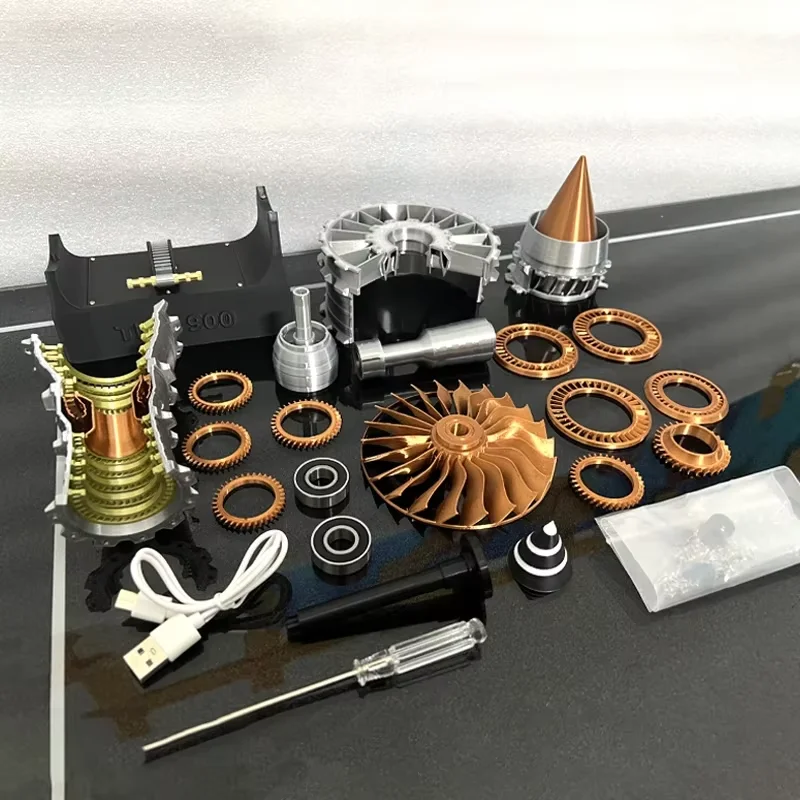
The TR900 turbofan engine model focuses more on educational value and visual realism than raw performance. Below are its main features and specifications, explained from a user-benefit perspective.
- Model Name: TR900 Turbofan Engine Model
- Type: Aircraft turbofan engine replica
- Material: 3D-printed PLA plastic
- Size: Approximately 28 cm (desktop-friendly)
- Power Source: 2 × AA batteries (not included)
- Functionality: Rotating fan blades and internal stages
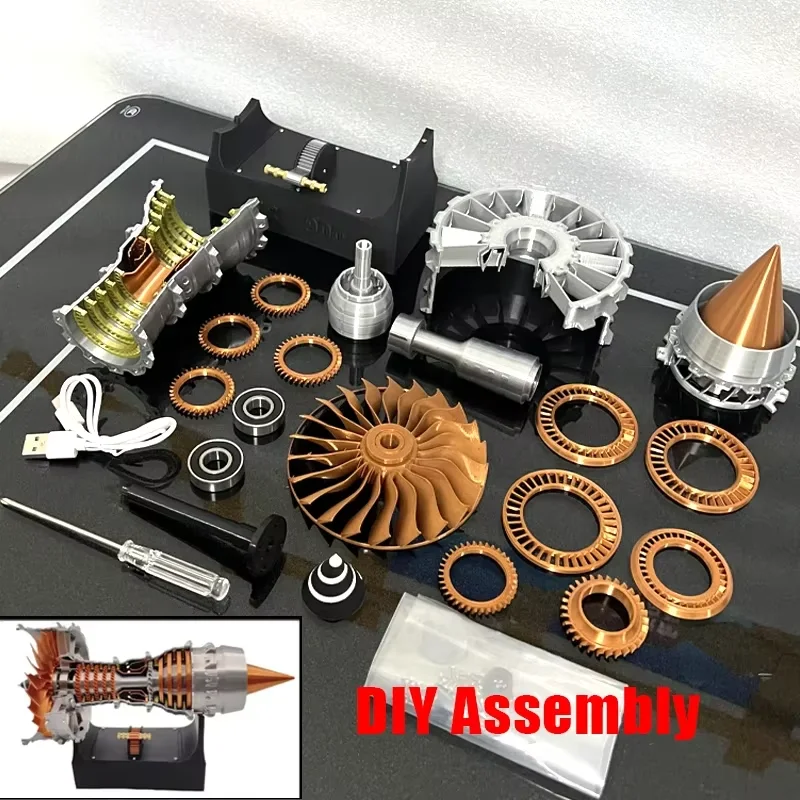
- Assembly Options: Pre-assembled or DIY building kit (varies by seller)
- Recommended Age: 14 years and above
- Certification: CE certified
From a practical standpoint, the 28 cm size strikes a good balance. It’s large enough to show internal details clearly, yet compact enough to fit on a desk or shelf without dominating the space.
The battery-powered motor allows the fan blades to rotate, making the model more engaging than static replicas. This movement helps users understand how air flows through a turbofan engine.
While the PLA plastic construction keeps the model lightweight, it also means buyers should approach it as an educational and display piece—not a rugged mechanical device. Overall, the feature set aligns well with its intended role as a learning-focused gadget.

Design, Performance, Build Quality & Usability
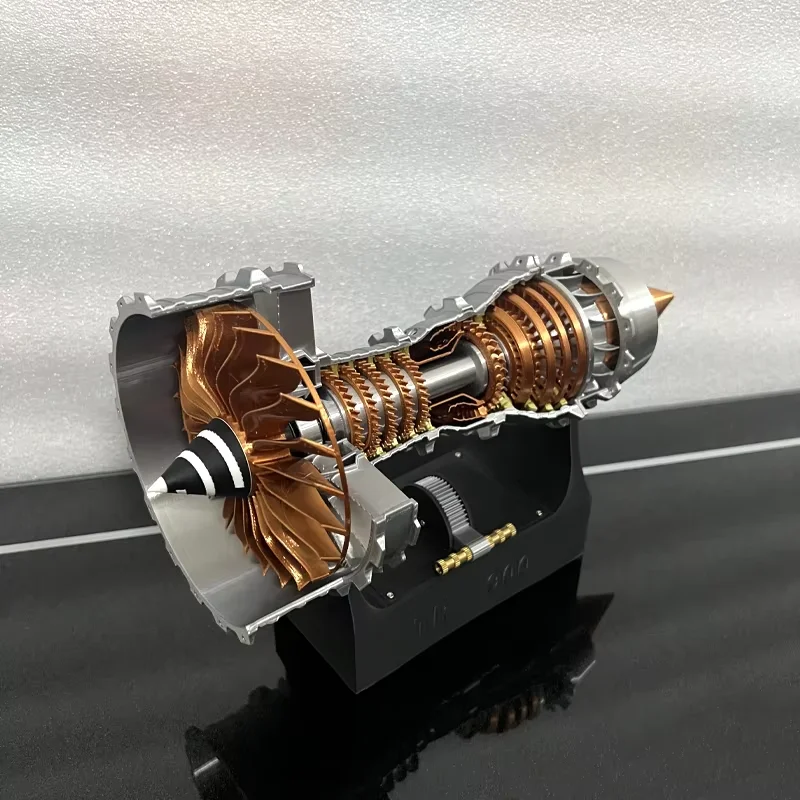
Visually, the TR900 turbofan engine model looks clean and modern. Its design mirrors the general layout of a high-bypass turbofan engine, with visible fan blades at the front and internal stages that can be observed through cutaway sections.
The model is made entirely from 3D-printed PLA plastic, which keeps it light and easy to handle. However, as expected with 3D printing, print lines are visible on some parts. This doesn’t affect functionality but may be noticeable to users expecting injection-molded or metal finishes.
In terms of performance, the motor-driven rotation works as intended. The fan blades spin smoothly, though not at high speed. This slower rotation actually helps from an educational standpoint, allowing viewers to clearly observe movement rather than seeing a blur.
Usability is straightforward. Battery installation is simple, and setup requires minimal effort. For DIY versions, assembly generally takes 1–2 hours, depending on experience. Some users mention that careful alignment is needed during assembly to avoid friction between parts.
Compared to premium metal engine replicas that cost significantly more, the TR900 trades absolute realism for affordability and accessibility. It performs well within its category.
✅ Pros & ❌ Cons
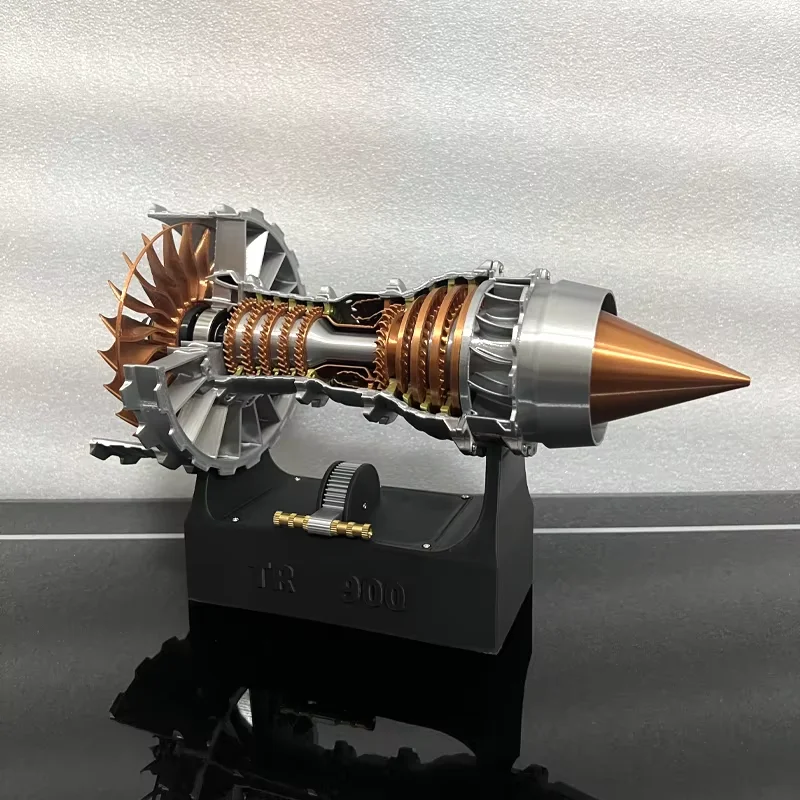
Like any gadget, the TR900 turbofan engine model has strengths and limitations. Based on hands-on impressions and customer feedback, here’s a balanced overview.
✅ Pros:
- Educational and visually engaging turbofan engine model
- Rotating fan system enhances learning experience
- Compact size suitable for desks and classrooms
- Good value compared to high-end aviation replicas
- Appeals to students, hobbyists, and aviation fans
❌ Cons:
- Made entirely of plastic, not metal
- Some parts may feel delicate during assembly
- Motor rotation speed is relatively slow
- Visible 3D print lines affect premium feel
Overall, the pros outweigh the cons if expectations are aligned with its price and purpose.
What Customers Are Saying
Customer reviews across marketplaces like AliExpress and Amazon provide a realistic picture of how the TR900 turbofan engine model performs in everyday use.
⭐Positive Feedback Highlights
Many buyers appreciate the educational value of the model. Students and parents often mention that it makes understanding jet engines easier and more engaging.
- “Looks great on my desk and actually helps explain how turbofan engines work.”
- “Surprisingly detailed for the price. A great learning tool.”
Collectors and aviation fans also praise its display appeal, noting that it works well as a conversation starter in offices and study rooms.
⚠ Negative Feedback Highlights
On the downside, several users point out that the model is plastic, not metal, which can feel disappointing if expectations aren’t set correctly.
- “I thought it would be metal, but it’s 3D-printed plastic.”
- “Assembly wasn’t hard, but you need to be careful or parts can rub.”
Overall, feedback trends positive when buyers understand what the product is designed to offer.

FAQs – Frequently Asked Questions
Q1. Is the TR900 turbofan engine model suitable for beginners?
Yes, it’s suitable for beginners, especially those new to aviation or engineering models. The assembly process is straightforward, and no glue or advanced tools are required. That said, patience is helpful during alignment.
Q2. Does the model actually rotate?
Yes. The front fan blades and internal components rotate using a small battery-powered motor. This feature is meant to demonstrate engine operation visually rather than replicate real engine speeds.
Q3. Is this model made of metal?
No. The TR900 turbofan engine model is made from PLA plastic using 3D printing. This helps keep the cost lower but also means it’s lighter and less durable than metal replicas.
Q4. How accurate is it compared to a real turbofan engine?
The model offers a simplified representation of a turbofan engine. While it demonstrates basic airflow and fan stages, it does not include every internal component found in real engines.
Q5. Can this be used as a teaching aid?
Yes. Many educators and parents use it as a STEM teaching tool to explain jet propulsion, airflow, and mechanical systems in a hands-on way.
Q6. How long does assembly take?
For most users, assembly takes between 1 and 2 hours. Experienced model builders may finish faster, while beginners may take a bit longer.
Q7. Is it suitable for children?
The recommended age is 14+. Younger children may enjoy watching it operate, but assembly and handling are better suited for teens and adults.
Q8. Does it include batteries?
No. The model requires 2 AA batteries, which are not included in the box.
Final Verdict – Should You Buy It?
The TR900 turbofan engine model is not a luxury collector’s piece, nor does it aim to be. Instead, it fills an important niche: making jet engine concepts visible, understandable, and affordable.
If you’re an aviation enthusiast, a student exploring aerospace engineering, or someone looking for a unique educational gift, this model makes a lot of sense. It offers solid learning value, decent visual detail, and a functional rotating system at a price far below high-end replicas.
However, if you’re expecting metal construction, perfect realism, or premium finishes, this may not meet your expectations. Understanding what the product is—and isn’t—is key to satisfaction.