ALLPOWERS 100W Solar Panel: Marketing vs. Reality
The Real Talk Intro & Quick Verdict
Power cuts, long camping trips, or even just a day outdoors—these are the moments when you realize how dependent everything is on electricity. Phones, laptops, lights, even small medical devices… once the battery dies, you’re stuck. That’s where portable solar panels step in, promising a simple idea: unfold a panel, point it at the sun, and get power anywhere.
The ALLPOWERS 100W Foldable Solar Panel is one of the most talked-about options in this space. On paper, it sounds ideal—100W output, foldable design, multiple ports, and compatibility with power stations. But solar gear has a habit of overpromising. Ratings are often measured under perfect lab conditions that don’t exist in real life, and small design flaws can make a big difference in daily use.
So instead of relying on specs, we went through more than 50 real user reviews across platforms. We focused on consistent patterns: what people liked after weeks of use, what frustrated them, and what actually worked outdoors. The goal wasn’t to confirm the marketing—it was to understand the reality.
Quick Summary
The panel is dependable for light to moderate use, especially for charging phones, power banks, and small battery stations. It’s not a high-output solution, and it won’t replace a full solar setup, but it holds its ground as a portable option.
Verdict: A practical, mid-range portable solar panel that works best when you understand its limits.
Best For: Campers, travelers, and emergency backup users.
Not Ideal For: Heavy power users or full-time off-grid setups.
Check Current Price: Affiliate Disclosure (Note: Prices are not mentioned here as they may change — refer to the affiliate links for updated deals. No additional cost to you.)
What stood out during research wasn’t just the positive feedback—it was how consistent the experiences were. Across different regions and use cases, users reported similar output ranges, similar quirks, and similar workarounds. That consistency is important because it tells you what to realistically expect before buying.
Use-Case Breakdown: Who Wins and Who Loses?
The experience with this panel depends heavily on how you plan to use it. For a weekend camper, the value is obvious. Imagine setting up a small camp, leaving the panel out in the sun, and slowly charging your phone and power bank throughout the day. You’re not worried about speed—you just want steady power. In this situation, the panel fits naturally into the routine. By evening, your essentials are charged, and you didn’t need a wall socket.
For someone living the van life or using an RV, things become more complicated. Your energy needs are higher—lights, maybe a portable fridge, possibly a laptop. The panel can still help, but it becomes part of a larger system rather than the main source. You’ll likely pair it with a power station, and even then, you’ll notice that charging takes time and depends heavily on sunlight positioning. It works, but it doesn’t carry the entire load.
For emergency backup users dealing with power outages, the panel becomes a slow but reliable safety net. You can charge phones, keep a power bank topped up, and maintain basic communication. However, it’s not instant power. If your expectation is to recover quickly after a blackout, you’ll need patience or a larger setup.
Then there’s the question of gifting. On the surface, this seems like a thoughtful, practical gift—something useful rather than decorative. But it’s not entirely plug-and-play. The person receiving it needs to understand how to position it, when to use it, and what it can realistically power. For someone who enjoys gadgets or outdoor activities, it’s a great choice. For someone who just wants convenience, it might feel like extra work.
The Gift Giver Question
This matters more than people admit.
Is this a gift that creates joy—or work?
Good news:
- Assembly is minimal
- Battery charging is USB-C
- Controls are intuitive
Bad news:
- Small decorative parts can fall off
- AA batteries for the remote aren’t included
Overall:
It’s a solid gift, especially if you’re okay explaining “this isn’t a race car.”
Features vs. Reality (The Truth Table)
Marketing Claim | Reality After Research |
|---|---|
100W Output | Usually 45–70W in real conditions |
High Efficiency (23.5%) | Efficient for its size, but still sunlight dependent |
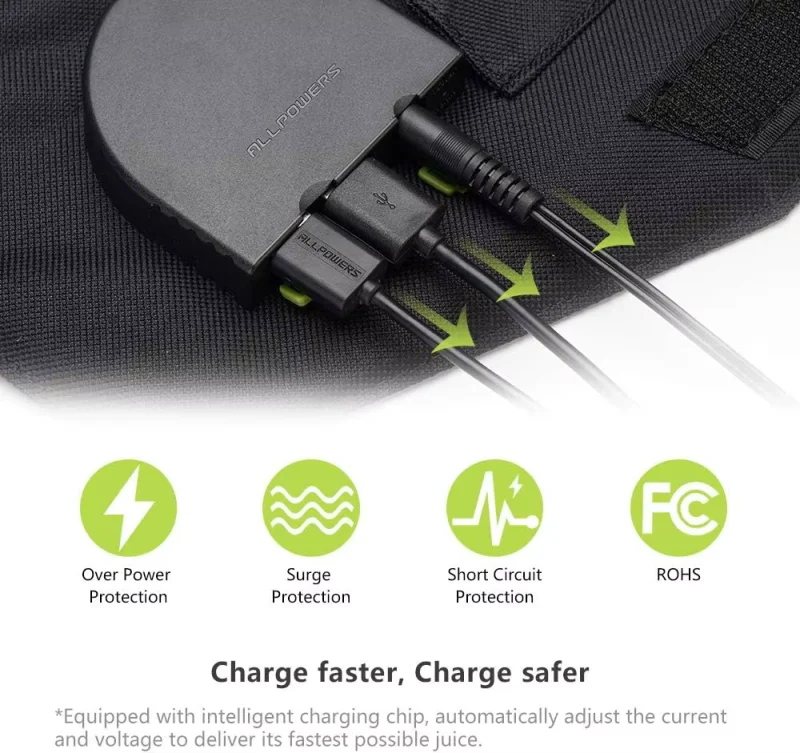
Multi-device charging | Works best with one device at a time |
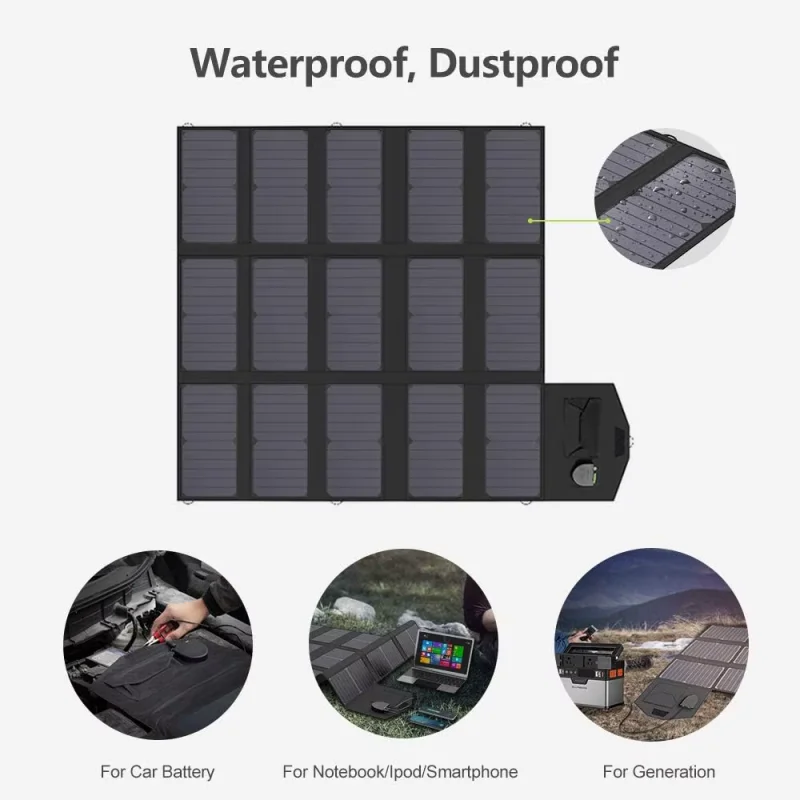
Waterproof (IP65) | Handles splashes, not heavy rain |
Ultra-portable | Compact, but slightly heavy for long hikes |
Technical Specifications
- Power: 100W (rated)
- Real Output: ~45–70W typical
- USB Output: 5V / 2.4A (dual ports)
- DC Output: 18V / 5A
- Weight: ~2.1–2.4 kg
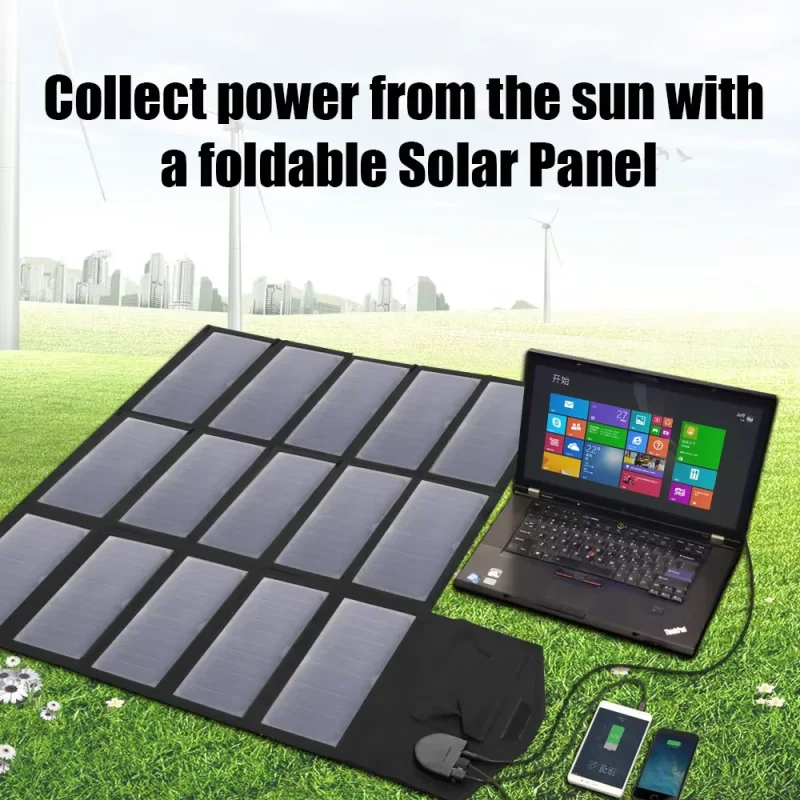
- Folded Size: ~12.6 × 7.5 × 3.6 inches
- Unfolded Size: ~37 × 37 inches
- Material: Monocrystalline solar cells
- Waterproof Rating: IP65
Build & Design Deep-Dive
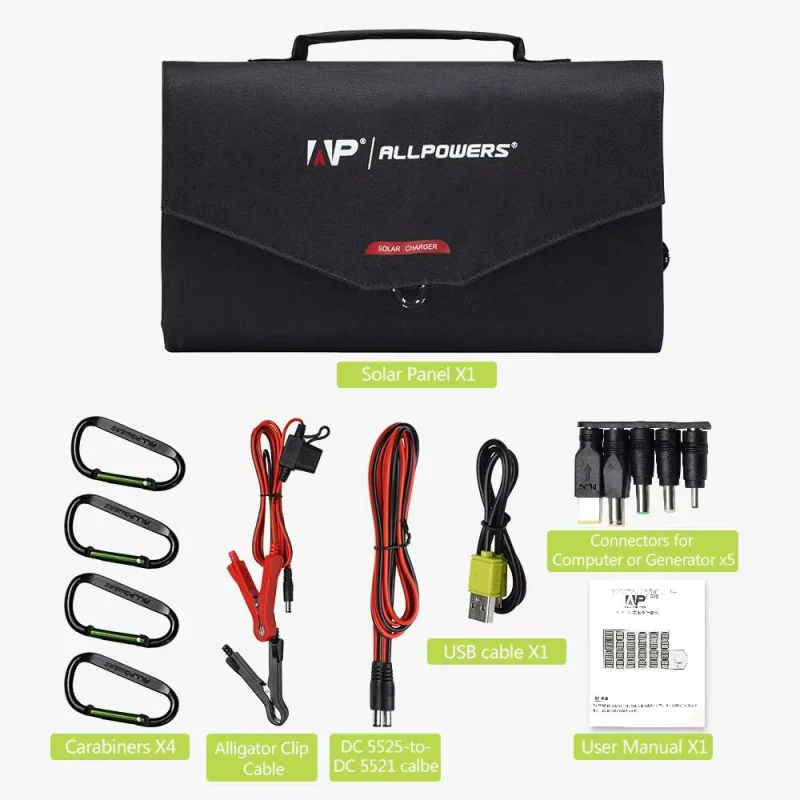
Out of the box, the panel doesn’t try to impress with premium packaging. It’s functional—panel, cables, connectors, and a simple manual. The focus is clearly on utility rather than presentation. When you unfold it, the design immediately makes sense: lightweight, flexible panels stitched into a foldable fabric frame.
The material feels durable enough for outdoor use, with a canvas-like backing that adds some protection. The solar cells themselves are flexible but not indestructible. You have to handle them with care, especially when folding. Press too hard or bend at the wrong angle, and you’ll notice it right away.
The folding process is one of those small details that becomes more noticeable over time. It’s not difficult, but it’s not intuitive either. After a few uses, you get used to the sequence, but the first attempt can feel awkward. The built-in pouch is another area where the design feels slightly unfinished. It doesn’t comfortably hold all the included accessories, which means you might end up carrying a separate bag for cables. (And yes, small adapters are easy to misplace if you’re not paying attention.)
One important design limitation is the lack of a built-in stand. This affects how you position the panel and, ultimately, how much power it generates. Without proper angling, efficiency drops, so you’ll often find yourself improvising with bags, ropes, or nearby objects.
Performance & Long-Term Reliability
Week One vs. Reality
In the first few days, most users are impressed:
- Devices charge
- Output seems stable
- Setup feels easy
After a week, patterns emerge:
- Output fluctuates with angle and sunlight
- Cables and connectors matter more than expected
- Multi-device charging becomes less reliable
The biggest takeaway: this panel is consistent, but only within realistic limits.
Troubleshooting Common Issues
- Not getting expected wattage?
- Adjust angle toward sun
- Avoid flat placement
- Use shorter, high-quality cables
- Device not charging?
- Check connector compatibility
- Try a different port
- Output dropping randomly?
- Likely cloud cover or angle issue
- Loose DC connection?
- Secure it manually (some users even tape it)
Competitor Comparison
When comparing the ALLPOWERS panel to premium brands like Goal Zero, the most immediate difference is the significant cost savings, as this panel is much cheaper while remaining lighter and more compact. However, this lower price point means the unit feels less refined than its high-end counterparts. Goal Zero panels are known for offering sturdier builds, superior integrated stands, and more reliable connections, but these benefits come with the trade-offs of costing significantly more and taking up more storage space.
Against budget-focused competitors, ALLPOWERS holds its ground well, delivering performance that remains consistent with its price range. Ultimately, choosing this panel over a premium alternative means you are trading professional-grade polish and build quality for high functional value.
The Good, The Bad, & The Ugly
✅ Pros
- Compact folding design makes it easy to carry
- Reliable output for small to medium devices
- Works well with power stations
- Good value compared to premium brands
- Simple plug-and-use functionality
❌ Cons
- Real output far below advertised 100W
- No built-in stand affects efficiency
- Limited multi-device performance
- Storage pouch is poorly designed
- Not suitable for heavy-duty power needs
⚠️ Researcher’s Note
If you rely on this for critical use, test it at home first. Solar setups always behave differently in real conditions.
Community FAQ & Sentiment
What People Are Saying (Paraphrased)
- One user noted they consistently got around 60W in sunlight, which matched expectations.
- Another said it fully charged a battery pack in about 4 hours, even in partial cloud.
- A camper described it as “simple but effective,” especially for phones and speakers.
- Some complained about loose ports and awkward folding.
- A few users mentioned it stopped working after long exposure to rain.
FAQs
Q1. Does it really produce 100W? No. Expect about half to two-thirds of that.
Q2. Can it charge a laptop? Sometimes—but compatibility varies.
Q3. Is it waterproof? Splash-resistant only. Not for heavy rain.
Q4. Can it charge multiple devices? Technically yes, but performance drops.
Q5. Is it good for power outages? Yes, for small devices and backup charging.
Q6. Can it charge a car battery? Yes, but slowly and with proper setup.
Q7. Is it beginner-friendly? Mostly—but requires some setup learning.
Q8. Does it work in cloudy weather? Yes, but output drops significantly.
Final Thoughts
The ALLPOWERS 100W Foldable Solar Panel doesn’t try to be everything, and that’s actually its strength. It’s a portable, straightforward solution for generating power in situations where traditional electricity isn’t available. It performs consistently within its range, and it offers enough flexibility to be useful in a variety of scenarios.
At the same time, it’s not a replacement for a full solar setup or a high-capacity power system. It’s a tool, not a complete solution. If you approach it with realistic expectations—moderate output, dependence on sunlight, and some setup effort—it becomes a reliable addition to your gear.
In the end, this is one of those products where understanding its role makes all the difference. Used correctly, it does exactly what it’s supposed to do.